How to Hire a Moving Company: A Vetting Checklist for Downsizers
Check the DOT number, compare three written estimates and read every form before you sign. A calm, step-by-step guide to choosing a mover for a smaller home.
In this article 8 sections
To hire a moving company safely, confirm it is registered with the Federal Motor Carrier Safety Administration (FMCSA), get at least three written estimates, and refuse any large cash deposit. Read the paperwork before anything leaves the house. Then check that the estimate type, the inventory and the delivery terms are all in writing.
A downsizing move is often the first one in twenty years. The rules, the prices and the scams have all changed since then. This guide shows how to hire a moving company with a short checklist, and it is written for homeowners moving to a smaller place, near or far.
At Midlife Simplicity, we treat a move as a list of small jobs in the right order. Choosing the mover is job one, because every other date depends on it.
Why Does Hiring a Moving Company Need a Vetting Step?
Vetting matters because moving fraud is common enough that federal agencies publish warnings about it. A fake or careless mover can quote low, load your belongings and then demand more money before delivery. A short check before you sign removes most of that risk.
The U.S. Department of Transportation's Office of Inspector General lists several red flags of moving fraud. They include a phone answered with a generic "Movers" greeting, a company with no real online presence, and a demand for cash or a large deposit before the move.
Think of the vetting step as a one-hour job. You will spend about that long checking three companies and comparing the estimates. That hour is cheaper than a single lost box of heirlooms.

How Do You Check That a Mover Is Registered?
You check a mover by searching the FMCSA's database of registered movers and brokers. The agency says all interstate household goods movers and brokers must be registered. Its Tips for a Successful Move page explains that the search also shows insurance information and complaint records.
Start with the company's U.S. DOT number. The FMCSA advises you to avoid movers and brokers that do not show a DOT number in their advertising. If a company will not give you the number, move on.
Registered does not always mean authorized. The FMCSA's own frequently asked questions note that a company can be registered but not authorized to move household goods. Check that the listing covers household goods specifically.
Moves within one state fall under state rules instead. In that case, check your state's consumer protection office or licensing board for the mover's record.
Also ask a simple question: "Will your crew do my move, or will you hand it to another company?" Brokers are legal, but you should know which one you are hiring. Our guide to checking homeowners insurance before you move covers another call to make before moving day.
Binding or Non-Binding: Which Estimate Should You Choose?
A binding estimate fixes the price for the services listed, while a non-binding estimate is a best guess that can change. The FMCSA's rights and responsibilities booklet says that under a non-binding estimate, the mover cannot require you to pay more than 110 percent of the estimate at delivery.
The same booklet says weight does not change what you pay under a binding estimate. That makes a binding estimate easier to budget for. It also means the mover must list every service in writing, so read the list.
| Feature | Binding estimate | Non-binding estimate |
|---|---|---|
| Price certainty | Fixed for listed services | Can change with weight and services |
| Most you pay at delivery | 100% of the estimate | 110% of the estimate |
| Best for | Tight budgets, a firm load | A load that may shrink as you sort |
| Watch for | Extra charges for added items | A low quote that grows later |
If you are still sorting the house, a non-binding estimate can work in your favor. Fewer items means less weight, and the final bill follows. If the load is settled, ask for the binding price.
Whichever you pick, never sign a blank or incomplete estimate. The FMCSA warns against it unless the final cost is set after the move, based on the services actually provided.
What Questions Should You Ask Each Mover?
Ask every mover the same short list of questions, so the answers compare cleanly. Write the replies down, because verbal promises do not survive a dispute. A good company answers without hesitation and sends the answers by email.
Use these questions in order:
- What is your U.S. DOT number, and is it authorized for household goods?
- Will you visit the house or do a video survey before quoting?
- Is the estimate binding or non-binding, and what services does it list?
- Will your own crew load and deliver, or will another company?
- What liability coverage is included, and what does extra coverage cost?
- What is the delivery window, and what happens if it slips?
Pay attention to how each company handles the survey. A mover who looks through every room, including the attic and garage, is pricing the real load. A mover who guesses from a phone call is not.
Which Red Flags Mean You Should Walk Away?
Walk away from any mover that shows two or more of the warning signs below.
A single odd detail may be an honest company with a poor website. A pattern is not.
These are the signs to watch for:
- The company will not accept credit cards and wants cash, a money order or a wire transfer.
- It asks for a large deposit before it has loaded anything.
- It gives a quote by phone with no survey, video call or inventory.
- Its price is far below the other two quotes.
- It claims decades in business but has no online presence or reviews.
- It answers the phone with a generic name instead of the company name.
The Inspector General's office also advises comparing estimates from several reputable, long-standing movers. That comparison gives you a baseline for what a fair price looks like in your area. The outlier is usually the problem.
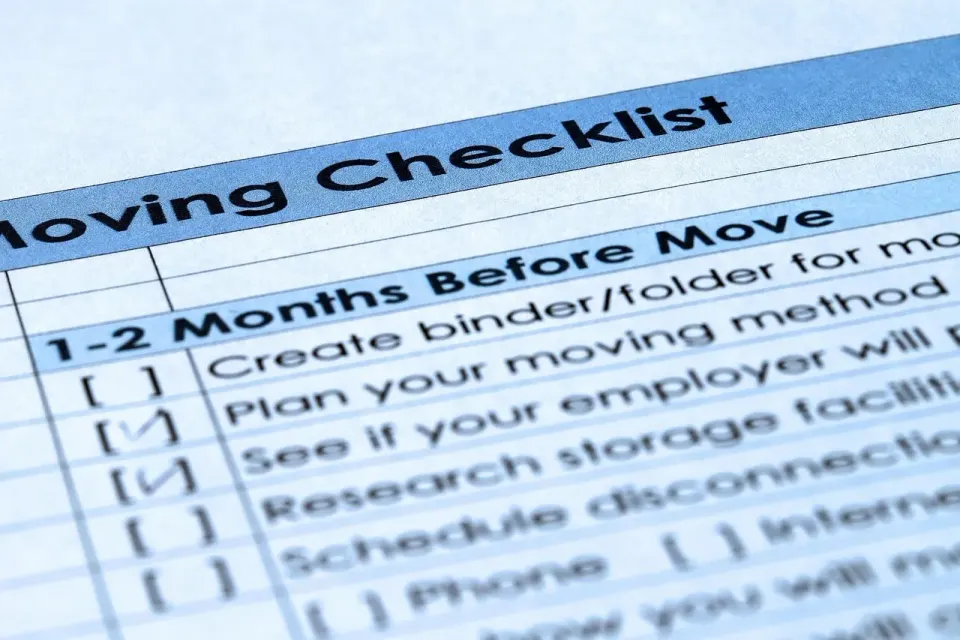
Keep every email, contract and receipt in one folder. Our guide to updating your license, registration and voter record lists the other paperwork to finish after the move.
What Should You Check on Moving Day?
On moving day, check three documents: the order of service, the inventory and the bill of lading. The FMCSA describes the order of service as written confirmation of the services you asked for, including dates and the liability amount you chose. The bill of lading carries the contract terms and often doubles as the freight bill.
The mover must prepare an inventory of your shipment. Walk through with the crew lead and compare it with your own list. Mark any damage before the truck is loaded, not after.
Tell the mover about high-value items before they are packed. Jewelry, documents, medications and small electronics are better carried in your own car.

The FMCSA also tells consumers not to agree to pickup or delivery "as soon as possible." Get dates or a date range in writing. At delivery, never sign a receipt that releases the mover from liability until you have checked your belongings.
If something goes wrong with an interstate move, the OIG says you can file a complaint with the FMCSA's National Consumer Complaint Database. Keep photos, the inventory and every signed form.
How Can You Cut the Bill Before the Movers Arrive?
You can cut the bill by moving less. Most long-distance quotes depend on the weight or the space your belongings use, so every box you donate lowers the price. That is why sorting should come before booking, or at least before the final estimate.
Marcus Bell, our organizing editor, suggests short sessions of one to two hours, starting with the rooms you use least. Attics, garages and spare bedrooms come first. Each cleared room is a measurable drop in the load.
Our ten-week winter move countdown shows how to schedule that work against a moving date. If heirlooms are the sticking point, the plan for sorting heirlooms with family helps you decide who gets what before the truck is booked.
Decide how much packing you will do yourself. Packing is usually a separate line on the estimate, so ask for it itemized. Many downsizers pack the easy rooms alone and pay the crew for fragile items and furniture wrapping.
Ask about stairs, long carries and elevator fees as well. Charges like these can appear at the door, so have each one listed in writing before the quote is signed.
Book your mover only after the first big sort. Ask for a second survey if the load drops by a quarter or more. A revised estimate is a small request that can save real money.
Your Next Step: Make Three Calls
Hiring a moving company comes down to a few checks done in order. Look up the DOT number, compare three written estimates, pick the estimate type that suits your load, and read every document before you sign.
Midlife Simplicity's editors recommend starting today with the three calls. Write down each company's name, DOT number, price and estimate type on one page. Then choose the one that passes every check, not the one with the lowest quote.
How do I check if a moving company is legitimate?
How many moving estimates should I get?
What is the difference between a binding and a non-binding moving estimate?
Should I pay a deposit to a mover?
This guide is part of our Relocation series. One small job a week arrives in Sunday Notes, with nothing to sell you.
In this article 8 sections



Sunday Notes
One email.
One small job
for the week.
Every Sunday: a single checklist, a single story, nothing to sell you. Unsubscribe in one click.