Moving in Winter: A Ten-Week Countdown for a Cheaper January Downsizing Move
January and February are the quietest months for movers, and rates can be lower. Here is how to sort, book and weatherproof a downsizing move starting this week.

In this article 11 sections
A January or February move is often the cheapest time to downsize. Moving volume bottoms out then, and some movers cut rates by up to 30%, according to Allied Van Lines. The trade-offs are weather and holiday delays. Start sorting now, book a mid-month weekday and build a buffer for snow.
If you plan to sell or leave your home this winter, the next ten weeks decide how smooth it goes. At Midlife Simplicity, we break a move into small, ordered jobs, and timing is the first one. This guide covers why winter can save money, a week-by-week countdown from late October, and how to protect your move from ice, delays and a crowded holiday calendar.
Is Winter Really the Cheapest Time to Move?
Yes, for most households. Allied Van Lines reports that about 60% to 80% of household moves happen between May and September, with June through August the busiest stretch. Allied's cheapest-time guide says volume is lowest in January and February, and that movers have lowered rates by as much as 30% in winter.
That 30% comes from a mover's own site, so treat it as an upper bound, not a promise. Your real savings depend on your region, the distance and how flexible your dates are. Ask for written quotes for a winter date and a summer date, and compare them side by side.

Flexibility is where the savings come from. Movers in a slow month have open trucks and crews. They are more willing to negotiate, and they may offer more choice of dates, including specialized help for pianos, safes and large furniture.
Which Days and Weeks Cost the Least?
The second or third week of the month, on a Monday through Thursday, usually costs the least. Allied advises avoiding the first and last weeks of a month, when leases expire and demand is high. Fridays and Saturdays are the most popular days, and they carry the highest rates.
| Choice | Usually cheaper | Usually pricier |
|---|---|---|
| Month | January or February | June to August |
| Week of the month | Second or third | First or last |
| Day of the week | Monday to Thursday | Friday and Saturday |
Combine all three, and you can land in the cheapest slot a mover offers. If your home sale or lease sets your moving date, ask whether the closing can be moved by a week. A shift of a few days can matter more than a lower hourly rate.
What Does a Ten-Week Countdown Look Like?
A ten-week countdown works backward from your moving date and starts with sorting. Sorting takes longer than most people expect, and rushing it leads to paying movers to haul things you will later donate. The table below fits a mid-January move.
| Weeks before move | Job |
|---|---|
| 10 to 9 | Measure the new home and list what must fit |
| 8 to 6 | Sort room by room into keep, sell, donate and discard |
| 5 to 4 | Get three written mover quotes and book the date |
| 3 | Donate, sell and schedule hazardous waste pickup |
| 2 | Pack non-essentials and label boxes by room |
| 1 | Pack an essentials box, confirm movers and utilities |

Start with the rooms you use least, such as the attic, garage and guest room. Those decisions are easier and build momentum. Save the kitchen and the photographs for later, when you have practice making calls.
How Do You Sort Without Getting Stuck?
Use four labeled piles: keep, sell, donate and discard. Give each room a time limit, and decide on every item the first time you pick it up. A "maybe" box is allowed, but it gets one deadline, and anything still in it on that date goes to donation.
Measure first so you know what the new home can hold. Our guide to selling household items when downsizing covers the tax side of the "sell" pile, and our piece on donating furniture when downsizing explains the "donate" pile. Both are worth reading before you list anything.
Handle hazardous items early. Paint, solvents, batteries and old chemicals cannot go on a moving truck, and many collection sites have limited hours in winter. Our checklist on household hazardous waste when downsizing shows what to take where.
How Do You Protect a Winter Move From Weather?
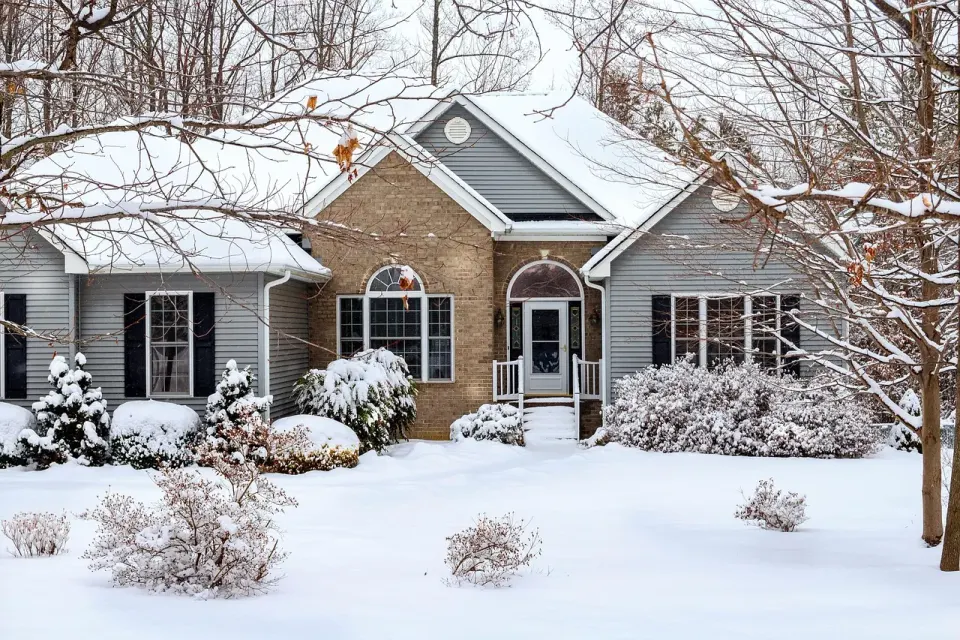
Build in a buffer and a backup date. Snow, ice and cold can delay trucks, close roads and make driveways unsafe. The National Weather Service posts winter weather safety guidance that helps you judge when conditions are too risky to travel.
Take these steps before moving day.
- Ask your mover about its weather policy and how it reschedules.
- Keep a backup date within the same week, if the lease or closing allows.
- Clear and salt walkways and the driveway the night before.
- Protect floors with runners, and keep towels by the doors.
- Keep medications, documents and a phone charger in your own car.
Also plan the utilities. Heat in both homes should stay on until you hand over the keys. Schedule shut-off and start dates for electricity, gas, water and internet with a day or two of overlap.
How Do You Avoid a Rogue Mover in a Slow Season?
Verify the company before you pay a deposit. The Federal Motor Carrier Safety Administration (FMCSA) runs a Protect Your Move program that lets you check a mover's registration and complaint history. Its "Operation Protect Your Move" campaign targets companies that hold belongings hostage or add surprise fees.
Slow months can tempt a weaker company to take any job. Brokers are a common source of fraud, so ask whether the company that arrives will be the one you hired. Read our guide to hiring movers when downsizing for the full checklist of estimates and warning signs.

What Should You Pack Differently in Cold Weather?
Cold weather changes a few packing rules. Liquids can freeze and burst in a cold truck, and some electronics do not like sudden temperature swings. Plants rarely survive an unheated trailer, so plan to carry them in your own car.
- Move houseplants, candles and cosmetics in your heated vehicle.
- Let electronics and instruments warm to room temperature before powering them on.
- Keep photographs and documents in sealed plastic tubs, not cardboard.
- Wrap wood furniture in blankets or pads to guard against damp and cold.
Label every box by room and by what you will need first. In winter, you may arrive after dark, and a quick way to find lamps, bedding and the kettle makes the first night easier.
What Questions Should You Ask a Mover for a Winter Date?
A short list of questions helps you compare quotes fairly. Ask each company to answer in writing, so you can line up the answers later.
- Is your winter price lower than your summer price, and by how much?
- Is the quote binding, non-binding or capped?
- What happens if snow delays the move?
- Who will load and unload, and are they your own employees?
- What does your insurance cover, and what costs extra?
Pay attention to the answer on who does the work. Some companies subcontract the job to a crew you never met. That is not always a problem, but you should know before moving day. A clear, calm answer is a good sign.
What About the Holidays?
Holidays squeeze the calendar from late November to early January. Crews take time off, offices close and delivery windows slip. If you book a move that falls near a holiday, ask for a written time window and a contact number for moving day.
Family also takes time. A downsizing move before the holidays may mean sorting heirlooms with relatives who are visiting anyway. That can be a gift, if you plan it, with a short list of items to discuss and a quiet hour set aside. Do not let the sorting happen in the middle of a family dinner.
Is It Worth Moving in Winter if You Are Selling?
It can be, especially if you have already listed the home or have a lease ending. Waiting for spring may cost you more in carrying costs than a winter move saves. Compare the price difference on the truck with a month or two of mortgage, tax, utilities and insurance on the home you are leaving.
If the move is not tied to a closing date, the winter discount is a bonus, not a reason on its own. Choose the date that lets you sort in a calm, unhurried way. A move that feels manageable beats a cheap one that leaves you exhausted.
A Winter Moving Checklist
Finish this list in the final two weeks. It keeps the last days calm.
- Confirm the date, arrival window and total price in writing.
- Submit your mail forwarding at USPS and update key accounts.
- Photograph valuable furniture and electronics before they are packed.
- Pack a box of essentials, such as medicines, chargers, a kettle and bedding.
- Take a final walk-through of both homes with your phone camera.
Midlife Simplicity editors checked the timing figures against published mover guidance as of October 23, 2026. Prices vary by region and company, so use these numbers to ask better questions, not as quotes. This article is general information, not legal or financial advice.
What is the cheapest month to move?
What day of the month is cheapest to move?
How far ahead should I book a winter move?
How can I check that a moving company is legitimate?
This guide is part of our Downsizing series. One small job a week arrives in Sunday Notes, with nothing to sell you.
In this article 11 sections



Sunday Notes
One email.
One small job
for the week.
Every Sunday: a single checklist, a single story, nothing to sell you. Unsubscribe in one click.