Donating Household Items When You Downsize: IRS Rules for 2026
Before the truck leaves with your sofa and six boxes of books, learn which gifts qualify, what the IRS wants on paper and how to keep the receipts.

In this article 7 sections
You can deduct donated household items only if you itemize, the items are in good used condition, and a qualified charity receives them. Keep a dated receipt listing what you gave. Over $500 in total noncash gifts, add Form 8283 to your return. Gifts to relatives or neighbors never count.
Donating household items is the fastest way to empty a home you are leaving. It is also an easy place to lose a deduction you were entitled to. This guide is for downsizers, empty nesters and anyone clearing a house before a move. It covers which items qualify, what the IRS wants on paper, and a simple routine for donation day.
Midlife Simplicity covers the practical side of selling up and moving on, and taxes are one piece of that. The rules below are federal and current as of November 2026. This is general information, not tax advice, so confirm the details with a preparer.
Can You Deduct Donating Household Items in 2026?
Yes, but only if you itemize deductions on Schedule A of Form 1040 and give to a qualified organization. Gifts to individuals are not deductible, so handing a dresser to a neighbor earns nothing. For goods, you deduct the fair market value, which is the price a willing buyer would pay today.
The Internal Revenue Service (IRS) lays out these basics in its Topic No. 506 on charitable contributions. It also notes a change that starts with tax year 2026. People who do not itemize may deduct up to $1,000 ($2,000 if filing jointly) of cash gifts to certain qualified organizations.
That new rule covers cash. It does not cover a carload of lamps and winter coats. If you take the standard deduction, your donated goods will not lower your federal tax.
Itemizing pays only when your itemized total beats the standard deduction. Many downsizers who have paid off a mortgage find they sit below that line. A preparer or tax software can compare both totals before you build a detailed log.
Furniture and Large Items

Furniture is the hardest category to donate and the one people overvalue most. A sofa bought for $1,800 ten years ago might sell for $150 at a resale shop. Your deduction is that $150, not the sticker price from the showroom.
Charities set their own rules about what they will haul away. Many decline pieces with stains, missing parts or safety problems. Call before you book a truck, and ask whether they pick up or whether you must deliver.
Measure before you promise anything. A charity pickup crew will only take what fits through your doorway and onto the truck, so tell the dispatcher about narrow stairs, tight halls and anything that needs two people. Take photos of the pieces and send them ahead if the charity asks. That saves a wasted trip for both sides.
Large items also affect your moving budget. Every sofa that leaves in a charity truck is one you do not pay a mover to carry. If you are still choosing a crew for what remains, our vetting checklist for hiring a moving company shows what to confirm before you sign.
Clothing, Linens and Kitchen Items

Soft goods make up most of a typical clear-out, and they have a firm condition rule. Under IRS Publication 526, you cannot deduct clothing or household items unless they are in good used condition or better. Stained, torn or worn-out items do not qualify.
There is a narrow exception. You may deduct an item that is not in good used condition if you claim more than $500 for it and include a qualified appraisal and a completed Form 8283, Section B. For everyday linens and sweaters, that exception will almost never apply.
A simple test works well. Ask whether you would hand the item to a friend without apologizing. If the answer is no, take it to textile recycling instead of the donation bin.
Kitchen items deserve their own box. Complete sets of dishes, working small appliances and unchipped cookware are the pieces most charities accept readily. Cracked mugs and mismatched lids belong in the trash or recycling. Count a boxed set as one line on your list, with the number of pieces noted beside it.
Sort as you pack, and count as you sort. Write down how many bags of clothes, sets of towels and boxes of dishes go to each charity. At Midlife Simplicity, we suggest keeping one clipboard by the door so the count happens in the moment, not from memory a month later.
Books, Records and Collectibles
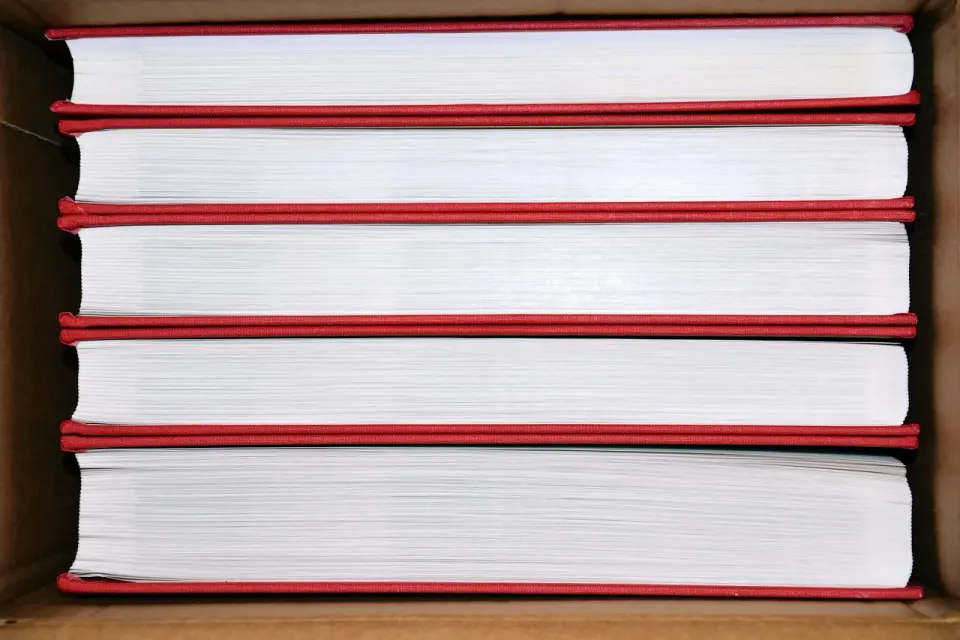
Books, albums and decor are easy to give away and hard to value. Most paperbacks have a very low resale value, so a crate of them adds little to your total. A first edition or a signed print is different, and it deserves a second look before it goes in a box.
The IRS sets higher bars as values rise. When you claim more than $5,000 for a single item or a group of similar items, you need a qualified appraisal and Section B of Form 8283. That rule is described in the same Topic No. 506 page, and it applies to items, not to the whole load.
Family pieces call for a different step first. Ask relatives what they want before anything is priced or given away. Our plan for sorting heirlooms with your family covers how to run that conversation.
The same order of operations applies when the home belonged to a late spouse. Decide what the family keeps, then donate. The sale itself has separate timing rules, which our guide to the two-year tax window after a spouse dies explains.
What Records Do You Need for Donated Goods?
Get a dated receipt from the charity listing what you donated, and keep your own item list with estimated values. For any gift of $250 or more, you need a written acknowledgment from the charity. When your total noncash gifts top $500, you also file Form 8283 with your return.
The written acknowledgment must describe any property you gave. It must also say whether the charity provided goods or services in return. A drop-off slip with only a charity name and a signature may not meet that test, so ask for the full form.
The table below shows what each level of giving requires, based on the IRS guidance.
| Total noncash deduction | What you need |
|---|---|
| Under $250 | A receipt and your own dated item list (good practice) |
| $250 or more | Written acknowledgment from the charity |
| Over $500 | Form 8283, Section A, attached to your return |
| Over $5,000 per item or group | Qualified appraisal and Form 8283, Section B |
| Over $500,000 | Section B plus the appraisal attached to the return |
The Instructions for Form 8283 explain which section applies to your gifts. Section B also needs the signature of the receiving charity, so ask for it on the day, not a year later.
How to Run a Donation Day Without Losing the Paper Trail
A short routine keeps everything in one place. Follow these steps in order:
- Photograph each pile before it leaves, with the items visible.
- Write a list showing each item or group, its condition and its estimated value.
- Confirm the charity qualifies using the IRS Tax Exempt Organization Search tool.
- Hand over the goods and collect the receipt that day.
- File the receipt, photos and list together with your tax records.
Spread donation trips over several weeks if you can. Three smaller loads are easier to document than one panicked run on moving day. Each trip gets its own receipt, which keeps the dates clean.
Store the paperwork where you will find it. Use a single folder labeled with the tax year and keep it with the rest of your return records. If you are moving across the country, scan the pages before the folder goes into a box.
Keep the value estimates honest. A thrift shop price tag on a similar item is a reasonable guide, and IRS Publication 561 covers valuing donated property in more depth. Overstating values is the quickest way to turn a small deduction into a large headache.
Putting Your Donation Plan Together
Donating household items works best when it starts early. Decide what family wants, sort by category, and book charity pickups before the movers arrive. Then collect one receipt per drop-off and file the paperwork as you go.
A worked example shows the stakes. Say you donate a $200 sofa, two $60 bookcases and 12 bags of clothes valued at $8 each. That totals $416, so no Form 8283 is needed. Add a $250 dining set and the total reaches $666, which triggers the form.
If you are moving into a smaller rental, the donation pile is part of the plan, not an afterthought. Our guide to how much rent you can afford in retirement helps you set the budget before you decide what to replace. Fewer belongings mean a smaller unit and a lower rent.
Can I deduct donated furniture if I take the standard deduction?
What if my donated clothes are worn or stained?
Do I need a receipt for every donation drop-off?
When do I have to file Form 8283 for donated household items?
This guide is part of our Downsizing series. One small job a week arrives in Sunday Notes, with nothing to sell you.
In this article 7 sections
Keep reading.
All stories

Sunday Notes
One email.
One small job
for the week.
Every Sunday: a single checklist, a single story, nothing to sell you. Unsubscribe in one click.