Donating Household Items When You Downsize: What the IRS Lets You Deduct in 2026
Which donated goods qualify, how to value them at thrift-store prices and what records to keep before you clear the house.
In this article 8 sections
Donating household items can earn a tax deduction, but only if you itemize and give to a qualified charity. The items must be in good used condition or better, and you deduct fair market value, which is usually the thrift-store price. Keep a receipt, and file Form 8283 when your noncash deduction tops $500.
Donating household items is the kindest way to empty a house, and it is also the one most people do without a record. This guide is for downsizers and empty nesters who are clearing a home and want to know what the Internal Revenue Service (IRS) allows. Midlife Simplicity breaks the job into short sessions, and a few minutes of record keeping fits into each one.
Below you will find which items qualify, how to value them, what records to keep and what to do with the rest. It is general information, not tax advice, so check your own return with a preparer.
Can you deduct donated household items on your taxes?
Yes, if you itemize on Schedule A and the charity is a qualified organization. According to IRS Topic No. 506 on charitable contributions, you can generally deduct the fair market value of property you donate. Gifts to individuals are not deductible, and only qualified organizations can receive deductible gifts.
A new rule starts with tax year 2026. The IRS says non-itemizers may deduct up to $1,000, or $2,000 if filing jointly, of cash contributions to certain qualified organizations. That rule is written for cash, so a carload of donated furniture does not appear to fit under it. Ask a preparer if your gifts mix cash and goods.
Many downsizers still take the standard deduction, and for them the tax benefit of donated goods may be zero. The gift is still worth making. A donation clears your house faster than a listing, and it needs no haggling. If you are weighing a sale instead, our guide on selling household items and the 2026 1099-K rules explains that side.
Which household items qualify for a deduction?

Household items include furniture and furnishings, electronics, appliances, linens and other similar items. The IRS says you cannot deduct clothing or household items unless they are in good used condition or better. A chipped, stained or broken item usually does not qualify.
The same IRS Publication 526 on charitable contributions lists what household items do not include. Food, paintings, antiques and other art, jewelry and gems, and collections are outside the household-items category. Those follow other valuation rules, and some need an appraisal.
There is one narrow exception. You can deduct a single article of clothing or a household item that is not in good used condition if you deduct more than $500 for it. In that case you must include a qualified appraisal and a completed Form 8283, Section B.
Work through the house by category, one room at a time, and keep the donation pile separate from the trash. A simple test helps: would you hand it to a friend without apologizing? If not, it probably belongs in the trash or the recycling.
How do you value donated clothing and furniture?
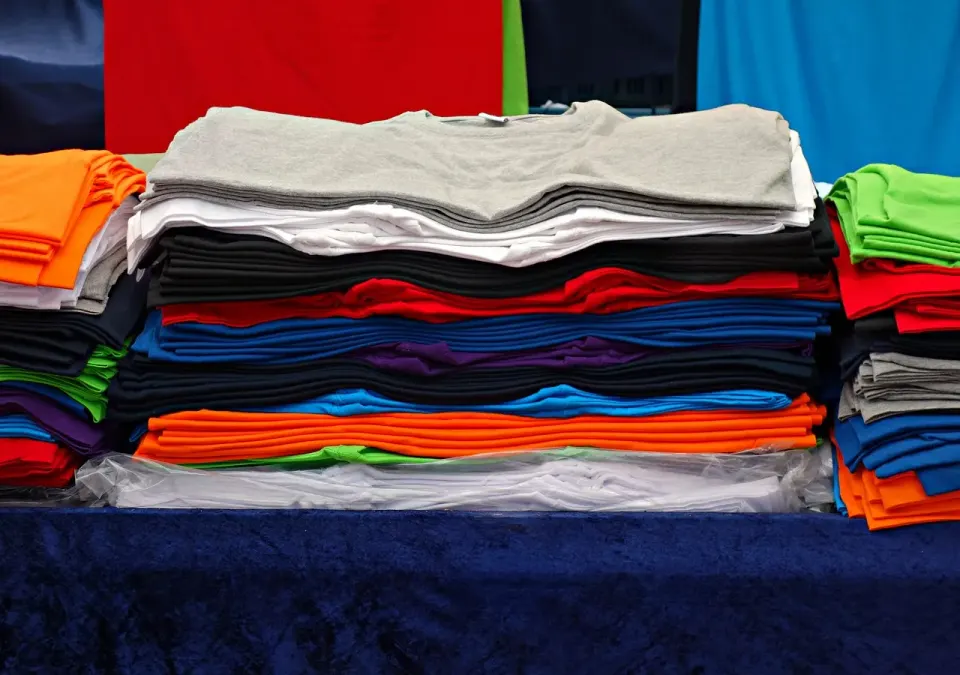
Value each item at what a buyer would pay for it used. The IRS says fair market value is the price at which property would change hands between a willing buyer and a willing seller. For clothing, claim the price buyers actually pay in consignment or thrift shops.
Publication 526 gives a clear example. A coat that cost $300 three years earlier sells for $50 in a thrift store, so the deduction is $50. The publication also says formulas, such as a percentage of the original cost, are not acceptable for household items.
The table below is a hypothetical donation from a three-bedroom house. The values are thrift-store prices, not the original cost.
| Item | Paid new | Used price |
|---|---|---|
| Sofa | $1,400 | $150 |
| Dining table | $900 | $120 |
| Winter coat | $300 | $50 |
| Bed linens | $200 | $40 |
| Microwave | $120 | $20 |
| Total | $2,920 | $380 |
The gap between $2,920 and $380 surprises most people. That is normal. Used goods lose most of their value, and a deduction built on the original price would not survive a question from the IRS.
Support your numbers with photographs, receipts or the charity's own list of values. The IRS says not to include that evidence with your return, but you should keep it.
What records do you need for a donation?
You need a receipt that names the charity, the date and a description of what you gave. For any contribution of $250 or more, the IRS requires a written acknowledgment from the organization. It must describe the property and say whether the charity gave you anything in return.
Form 8283, Noncash Charitable Contributions, comes next. The IRS says you must attach it if your deduction for any noncash contribution is more than $500. Section A covers deductions of more than $500 up to $5,000 per item or group of similar items. Above $5,000 you need a qualified appraisal and Section B.
Check the charity before you load the car. The IRS offers a Tax Exempt Organization Search tool that shows whether an organization can receive tax-deductible contributions. A neighbor, a relative or a crowdfunding page for a person is not a qualified organization, so those gifts earn no deduction.
If the charity gives you a benefit in return, such as a thank-you gift with value, you can deduct only the amount above the value of that benefit. Keep your records in one folder, and our paper-sorting plan with the IRS retention rules shows how long to hold on to them.
What about donating a car or other large items?
Downsizers often retire a second car along with the furniture. Publication 526 treats a car, boat or airplane as a qualified vehicle with its own rules. If its claimed value is more than $500, you generally deduct the smaller of the gross proceeds from its sale by the charity or its fair market value on the date of the gift.
The charity sends you Form 1098-C, Contributions of Motor Vehicles, Boats, and Airplanes, or a similar statement. You must attach Copy B to your return. Ask the charity at the start how it handles vehicles, because some sell the car and others keep it for their own use, and that changes the deduction.
Large furniture follows the ordinary household-item rules, but hauling it is a practical problem. Ask the charity whether it offers pickup, and measure doorways and stairs before you promise a delivery. Photograph each big piece where it sits, since that photo is useful evidence of its condition.
What should you do with items you cannot deduct?
Items that are broken, stained or unsafe should leave the house another way. Local waste programs, recycling drop-offs and bulky-item pickups take most of them. A charity generally cannot use an item it cannot sell, so bringing it only shifts the problem to someone else.
Valuable pieces deserve a separate decision. A good dining table or a set of china may sell for real money, and that is a different tax picture from a donation. Read about the risks first, since our piece on selling furniture online and fake payment scams lists the common tricks.
Gifts to family are not charitable deductions, but they may suit pieces with sentimental weight. Ask each person what they actually want, and give them a date by which to collect it. Anything left after the date goes to the donation pile without guilt.
A donation plan for the weeks before your move
Start early and keep each step small. The list below puts the paperwork next to the physical work, which avoids a scramble in December.
- Pick a qualified charity and confirm it takes the items you plan to give.
- Sort one room at a time into donate, sell, family and discard.
- Photograph the donation pile before it leaves the house.
- List each item with a used price based on local thrift-store tags.
- Get a dated receipt, and a written acknowledgment for gifts of $250 or more.
- File the list and receipts in one folder for your tax preparer.
Timing matters for the tax year. A donation generally counts for the year you make it, so gifts delivered before December 31 belong on the current return. A late-year push is common for downsizers, and it works best when the sorting started weeks earlier.
Once the house is lighter, the state paperwork is the next job. Our guide on updating your driver's license and voter registration after moving to a new state picks up where this one ends.
Conclusion: give well, document once
Donating household items clears a home quickly and helps another household. The deduction is a bonus that depends on itemizing, good condition, honest values and a receipt. None of it is hard when the records are collected as you go.
Your next step is to choose a charity this week and book a pickup date. At Midlife Simplicity, we suggest taking the photographs and the receipt on the same day as the donation, so the folder is complete before the van is even loaded.
Fact-checked against IRS Topic No. 506 and Publication 526 on November 20, 2026. Tax rules change, so check the current IRS guidance for your filing year.
Can I deduct donated clothes and furniture if I take the standard deduction?
How much can I deduct for a donated sofa or winter coat?
Do I need a receipt for donated household items?
When do I have to file Form 8283 for donated goods?
This guide is part of our Downsizing series. One small job a week arrives in Sunday Notes, with nothing to sell you.
In this article 8 sections



Sunday Notes
One email.
One small job
for the week.
Every Sunday: a single checklist, a single story, nothing to sell you. Unsubscribe in one click.