Storage Unit Rents Are Falling in 2026: Should You Rent One While Downsizing?
The national average is near $135 a month and slipping. Here is when a unit helps a downsizing move and when it just delays decisions.

In this article 11 sections
Storage unit rents are drifting down in 2026, with the national average near $135 a month, but a unit is still a recurring bill. Rent one only when you can name what goes in, how long it stays and when it comes out. For most downsizers, six months is a reasonable limit.
Falling rents tempt people to postpone hard decisions. A unit can feel like a pause button while you sort a lifetime of belongings. It is also a monthly charge that quietly grows into the price of the furniture you put inside it.
This guide looks at the latest rent data, shows the math for different time frames and gives a short process for deciding what to keep, sell, donate or store. Midlife Simplicity covers downsizing, selling and moving in small, ordered steps, and storage is one of the places where a clear rule saves money.
Are Storage Unit Rents Really Falling in 2026?
Yes, on average, though not everywhere. RentCafe's July 2026 self storage report put national street rates at $135 a month, unchanged from June and down 1.5% from July 2025. About 35% of the 150 largest cities saw rates rise from a year earlier.
The national figure is a weighted average of all unit sizes and both climate-controlled and standard units. A 10-by-10 unit in a big city can cost far more than the average. A small ground-floor unit in a smaller market can cost far less.
Yardi Matrix, which tracks advertised rates, shows the same direction. CRE Daily reported on September 24 that advertised rents fell 1.9% year over year in August, to $16.39 per square foot. Climate-controlled rents fell 2.3% and standard units fell 1.5%.

Where Are Storage Rents Dropping Fastest?
Mostly in markets with heavy new construction. RentCafe's July report lists some of the steepest declines in Spring Valley, Nevada, down 7.8% to $135, and Glendale, California, down 7.1% to $290. It also names Aurora, Illinois, Huntsville, Alabama and St. Petersburg, Florida among the larger drops.
Other cities moved the other way. Santa Clarita, California rose 10.3% to $192, and Milwaukee rose 6.1% to $113. A national average hides these swings, so check rates within a few miles of your home.
The Yardi data points to supply as the cause. It found that only four of the top 30 metros had annual rent growth, and that 24 of 30 had month-over-month declines. Yardi said that occupancy appears to have stabilized, but not enough to restore pricing power. For you, that means facilities may be willing to negotiate.
What Does Storage Really Cost Over Time?
The monthly price looks small, so the yearly total surprises people. The table uses the $135 national average and shows what each time frame costs. Replace the rate with a local quote.
| How long it stays | Cost at $135 a month | What it might equal |
|---|---|---|
| 3 months | $405 | A short bridge between homes |
| 6 months | $810 | A used sofa and dining set, replaced |
| 12 months | $1,620 | A full bedroom set, bought new |
| 24 months | $3,240 | More than most contents are worth |
Fees add to this. Many facilities charge an administration fee and sell insurance. Ask for a written quote that lists every charge for the first year. Also ask what the rate becomes after any introductory discount ends, because teaser rates often rise later.
When Is a Storage Unit Worth Renting While Downsizing?
A unit makes sense in three situations. You are between closing on one home and moving into another. You are staging your house and need to clear space for showings. Or you have a defined project, such as splitting items among family members at a set date.
A unit makes less sense as a place to hold what you cannot decide about. Open-ended storage tends to grow. Items you did not want in the house rarely become more wanted after a year in a metal box.
Use the replacement test. If a year of rent exceeds what you would pay to replace the item, sell or donate it. A $400 dresser stored for 12 months at $135 a month costs you $1,620 to keep.
How Should You Sort What Goes In?
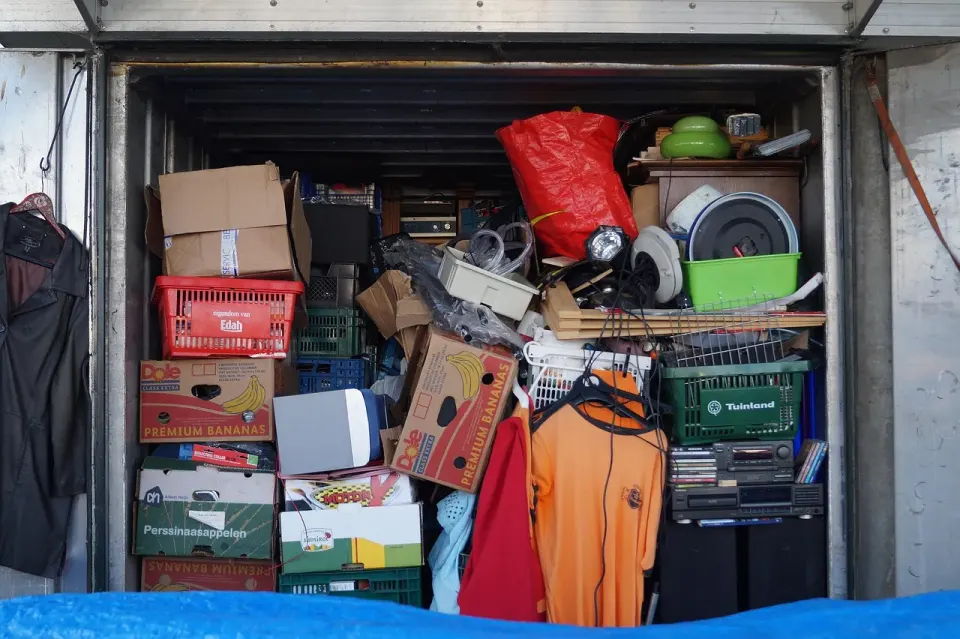
Sort into four piles before anything leaves the house: keep, sell, donate and store. The store pile should be the smallest. Each item in it needs a reason and a date.
- Keep: items that fit your new home and that you use weekly.
- Sell: items with real resale value and an easy buyer.
- Donate: items in good shape you do not need.
- Store: items with a clear future use and a retrieval date.
Be strict with the fourth pile. If you cannot say when you will retrieve an item, it probably belongs in one of the other piles. Our guide to selling household items when downsizing explains the 2026 reporting and tax rules for sales.
What About Donating Instead of Storing?
Donation clears space and may help at tax time. The IRS explains in Topic 506 on charitable contributions that you can only deduct them if you itemize. For gifts of $250 or more, you need a written acknowledgment from the charity. If your noncash deduction is over $500, you must attach Form 8283.
Many downsizers take the standard deduction, so the tax benefit may be small or zero. Donate for the space and the good it does, and treat any deduction as a bonus. Keep a list of items and a photo of each load.
Check each charity's rules before you load the car. Acceptance of furniture and large items varies by location and by season. A phone call saves a wasted trip.
What Should Never Go Into a Storage Unit?
Hazardous materials, food and anything alive. Most facilities prohibit paint, fuel, propane tanks, solvents and chemicals in their rental terms. Read your lease for the exact list.
Our guide to household hazardous waste when downsizing shows how to dispose of these items safely. Do it before the move, not after you discover a rule violation.
Be careful with irreplaceable items too. Photos, documents and jewelry belong with you, not in a unit that anyone with a key can open. Digitize what you can and carry the originals.

How Do You Negotiate a Better Rate in a Soft Market?
Ask for it. When advertised rents fall and supply is high, facilities compete for tenants. Call two or three within your area, and ask each for its best rate for a six-month rental with no long-term commitment.
Ask about the rate you will pay after the first few months, and whether it can rise during your stay. Ask whether a smaller unit, or one on an upper floor, costs less. Some facilities offer discounts for paying several months upfront, but make sure you can get a refund if you leave early.
At Midlife Simplicity, we suggest getting quotes in writing and keeping them with your moving paperwork. A written quote protects you if the price on your bill differs from what you were told.
What Are the Alternatives to a Storage Unit?
Several options may cost less. A family member's garage can work for a defined period if you agree on a pickup date. A portable moving container is delivered to your driveway, then stored or moved on your schedule, though pricing varies by company.
Another option is to time the move to avoid storage entirely. If you can close and move within a few days of each other, you may not need space at all. Our ten-week countdown for a winter downsizing move shows how to line up the steps.

A Six-Step Storage Plan
Follow these steps in order if you decide a unit is worth it. They keep the bill from drifting.
- Write down what will go in, with a rough value for each group.
- Pick an end date and put it on your calendar.
- Get three written quotes for the same unit size and term.
- Photograph the contents and label every box on two sides.
- Check your homeowner or renter policy for coverage of off-site items.
- Review the plan monthly and move out early if you can.
The monthly review matters. A unit you never visit becomes a bill you never question. A quick check on the first of each month keeps the end date in sight.
Conclusion
Storage rents are softer than a year ago, which gives downsizers some room to negotiate. But a unit still costs about $1,600 a year at the national average, so use it for a defined bridge, not for decisions you are avoiding. Sort first, set an end date and compare the cost with what you are storing.
This week, sort one room into the four piles and total what is left in the store pile. If the number is small, you may not need a unit at all.
How much does a storage unit cost in 2026?
Is it cheaper to store furniture or replace it?
Can I deduct donated household items on my taxes?
What should I not put in a storage unit?
This guide is part of our Downsizing series. One small job a week arrives in Sunday Notes, with nothing to sell you.
In this article 11 sections



Sunday Notes
One email.
One small job
for the week.
Every Sunday: a single checklist, a single story, nothing to sell you. Unsubscribe in one click.