Selling a Home After a Spouse Dies: The Two-Year, $500,000 Window
A surviving spouse can keep the larger home sale tax exclusion for two years. Here is how the clock, the basis and the paperwork fit together.

In this article 7 sections
If your spouse has died, you may be able to exclude up to $500,000 of gain when you sell your home, double the usual $250,000 for a single owner. You must close the sale within two years of the death, not have remarried, and meet the ownership and residence tests. Miss the window and the limit generally drops.
Selling a home after a spouse dies is rarely a decision anyone wants to rush. The tax rules, though, include a clock. This guide covers how the two-year window works, what happens to the home's tax basis after a death, and how to decide whether to sell inside the window. It is written for surviving spouses and for the adult children helping them. It is general information, not tax or legal advice.
Midlife Simplicity covers downsizing and moving as a short list of ordered jobs. For this one, the order is dates first, then numbers, then the listing.
How Does the Home Sale Exclusion Work for a Surviving Spouse?
Federal tax law lets you exclude up to $250,000 of gain from the sale of your main home, or $500,000 on a joint return. A surviving spouse who sells within two years of the death, and has not remarried, can generally still use the $500,000 figure if the usual tests are met.
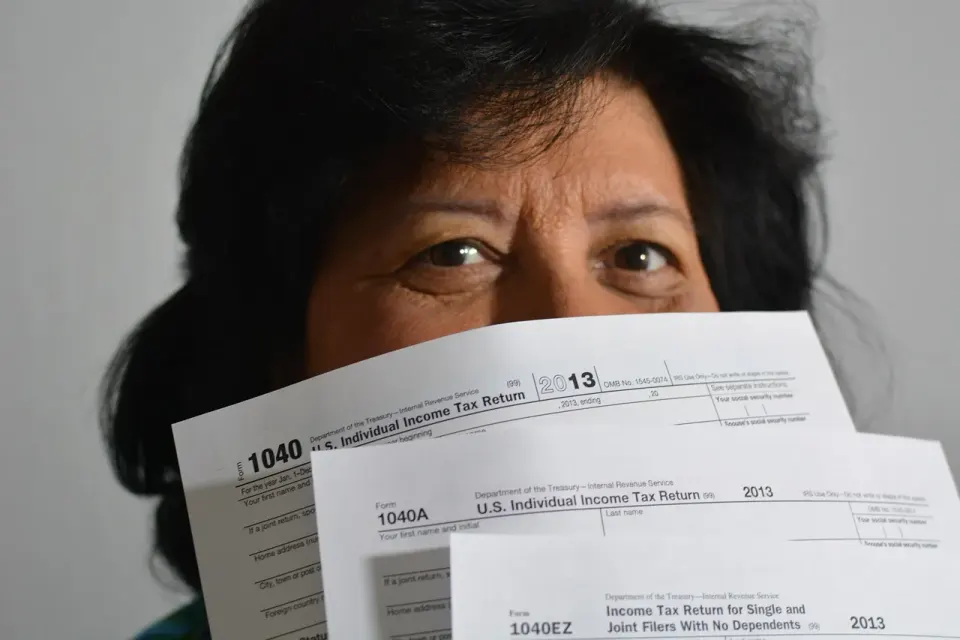
The Internal Revenue Service (IRS) sets out the basic rule in its Topic No. 701 on the sale of your home. You meet the ownership test if you owned the home for at least 24 months of the last five years. You meet the use test if you lived in it for 24 months of that same period. The two tests can be met during different two-year periods.
Gain is the sale price, less selling costs, minus your adjusted basis. Anything above the exclusion is taxed as a capital gain. The IRS says in its Topic No. 409 on capital gains and losses that a lower rate may apply to net capital gain than to ordinary income.
What Four Conditions Unlock the $500,000 Limit?
IRS Publication 523, Selling Your Home, lists the conditions for the higher limit. You qualify when all of the following are true:
- You sell the home within two years of your spouse's death.
- You have not remarried at the time of the sale.
- Neither you nor your late spouse took the exclusion on another home sold less than two years before this sale.
- You meet the two-year ownership and residence requirements, counting your late spouse's time in the home.
That last condition helps more than most people expect. If you have not remarried, Publication 523 lets you add the time your late spouse owned and lived in the home, even when you were not there with them. A house your spouse owned for years before you moved in can still count.
Check the third condition if you moved recently. Suppose you sold an earlier home and excluded the gain, and that sale happened 14 months before this one. The prior-exclusion rule could block the exclusion on this house, even inside the two-year window. Look at the dates on the earlier sale before you assume the full amount is available.
Remarrying before the sale changes the picture. The surviving-spouse rule no longer applies at that point, and the usual rules for your new filing status take over.
How Does the Two-Year Clock Actually Run?

The clock stops on the date of sale. It does not stop when you sign a listing agreement or accept an offer. Publication 523 says the date appears in box 1 of Form 1099-S if you receive one. If you do not, the date is when title transfers or when the benefits and burdens of ownership shift to the buyer, whichever comes first.
Here is a worked timeline. Say your spouse died on March 10, 2026. The sale would need to close before the second anniversary, March 10, 2028. An offer accepted in February 2028 with a closing set for April 2028 would miss the window. Closings often take a month or more, so count back from your deadline and leave a buffer.
The table below shows how the limit changes with the situation. It assumes the ownership and residence tests are met in each case.
| Situation | Likely exclusion limit | Why |
|---|---|---|
| Sale closes 18 months after the death, no remarriage | Up to $500,000 | All four conditions are met |
| Sale closes 30 months after the death | Up to $250,000 | The two-year window has closed |
| Remarried before the sale | Rules for your new filing status | The surviving-spouse rule no longer applies |
| Excluded gain on another home less than two years ago | Generally none for this sale | The prior-exclusion rule blocks it |
How Does Your Tax Basis Change After a Death?
Basis is what the home cost you, plus the cost of improvements that add to its value. The IRS explains this in Topic No. 703 on the basis of assets. A higher basis means a smaller gain.
A death usually raises that number. Under Publication 523, if you owned the home jointly, the half your spouse owned takes a new basis equal to its fair market value on the date of death. Your own half keeps its old basis. In community property states, the whole home generally takes the date-of-death value when at least half of its value is part of the decedent's gross estate. Those states are Arizona, California, Idaho, Louisiana, Nevada, New Mexico, Texas, Washington and Wisconsin.
Here is an illustration with round numbers, ignoring improvements. A couple bought a home for $180,000 and owned it jointly with survivorship rights. It was worth $620,000 when one spouse died. The new basis is $90,000 for the survivor's half plus $310,000 for the other half, or $400,000. A later sale at $650,000 with $40,000 in selling costs produces a gain of $210,000. That is under $250,000, so the whole gain fits inside even the single-owner exclusion.
A written appraisal dated near the date of death is the simplest proof of value. Keep it with the closing statement from the original purchase. If the home passed through a deed rather than a will, our guide to transfer-on-death deeds and the 2026 rule changes in Maryland and Georgia explains what to check on title.
Should You Sell Inside the Two-Year Window or Wait?

You are never required to sell. The window only matters when your expected gain is above $250,000. Run the basis math first. If the gain lands under that line, you can take the time you need without a tax penalty for waiting.
A larger gain changes the calculation. A home bought decades ago in a fast-rising market can easily carry a gain well above $250,000 even after the basis adjustment. In that case, each month past the deadline can cost real money, because the extra $250,000 of exclusion disappears.
Ask your agent for a net sheet, which estimates your selling costs and proceeds at a given price. Those costs reduce your gain, so even a rough net sheet sharpens the estimate.
Money is not the only factor. Upkeep, the mortgage, a house with too many rooms and the emotional load all count. At Midlife Simplicity, we suggest settling the deadline and the gain estimate first, so the decision about timing is made with facts in hand.
Market timing is a separate question. Our look at what September 2026 home sales mean for downsizers covers the case for listing now versus waiting for spring. If a listing sits, read what downsizers should do when a listing stalls before the deadline gets close. A low-rate FHA or VA loan may also be assumable, which is covered in our piece on selling a house with an assumable mortgage.
Edge cases exist. If adult children are co-owners, or the estate rather than you sells the home, different rules can apply. A tax professional can confirm which ones fit your situation.
What Paperwork Should You Gather Before the Sale?
Start a single folder and add these documents as you find them:
- The closing statement from the original purchase.
- Receipts for improvements, such as a new roof or kitchen.
- The date-of-death appraisal.
- Any record of an earlier home sale and whether you excluded the gain.
- Form 1099-S, once the title company sends it.
Reporting has its own rules. Per Topic No. 701, if you receive Form 1099-S you must report the sale even when the gain is fully excludable. You must also report it when you cannot exclude all of the gain, using Schedule D and Form 8949. Our editors recommend giving the folder to your tax preparer early, not in April.
Your Next Steps as a Surviving Spouse
Take these steps in order:
- Write down the date of death and mark the second anniversary on a calendar.
- Order a date-of-death appraisal for the home.
- Estimate your gain using the new basis, selling costs and any improvements.
- Decide whether the deadline matters, based on whether the gain tops $250,000.
- Work back from the deadline to set a listing date that leaves room for the closing.
The two-year window is a deadline, not a demand. Many surviving spouses find that the numbers leave plenty of room. Others find that a few months of delay would cost thousands. Knowing which group you are in is the real task.
Fact-checked against IRS Topic No. 701 and Publication 523 as of November 17, 2026. This is general information, not tax advice.
How long do I have to sell my house after my spouse dies to keep the $500,000 exclusion?
Do I owe tax if I sell the family home after my spouse passes away?
Does my late spouse's time in the home count toward the two-year test?
Do I have to report the sale if all of the gain is excluded?
This guide is part of our Selling series. One small job a week arrives in Sunday Notes, with nothing to sell you.
In this article 7 sections



Sunday Notes
One email.
One small job
for the week.
Every Sunday: a single checklist, a single story, nothing to sell you. Unsubscribe in one click.