How to Price Your Home to Sell in a Slower Fall 2026 Market
Mortgage rates are back above 7% and buyers have more choice. Here is how to set a list price that sells before winter.

In this article 8 sections
To price your home to sell this fall, start at or slightly below recent comparable sales, not above them. Buyers now face mortgage rates above 7% and more listings to choose from. A home priced right in its first two weeks usually beats one that chases the market down with a string of cuts.
The fall 2026 market has turned quietly in buyers' favor. Rates climbed through September and October, inventory is higher than a year ago, and homes are taking a little longer to sell. None of that is a crash. It does change the order of decisions for anyone selling a long-time family home before winter.
This guide is for downsizers and empty nesters who plan to list in the next few months. It covers what the latest numbers show, how to set a list price step by step, when a seller credit beats a price cut, and how to time the listing. At Midlife Simplicity, we cover selling up, renting and the paperwork in between, one ordered job at a time. Figures below were fact-checked against federal and industry data as of October 19, 2026.
What the Fall 2026 Numbers Say About Home Prices
The National Association of Realtors (NAR) reported that existing-home sales ran at a 3.99 million annual pace in September. Prices are still rising, but slowly. The NAR's September 2026 existing-home sales report puts the median price at $417,500, just 1.3% above a year earlier.
The same report shows buyers gaining room to negotiate. Inventory rose to 1.60 million homes, up 4.6% from last September. Supply sits at 4.8 months, up from 4.5. The median home now spends 33 days on the market.
NAR's chief economist, Lawrence Yun, said sellers need to be realistic about local conditions.
Borrowing costs are the bigger story. The Federal Reserve Bank of St. Louis tracks Freddie Mac's weekly rate survey, and its 30-year fixed mortgage rate series shows 7.40% for the weeks ending October 8 and October 15. That is up from 6.95% in mid-September.
A buyer approved in August may qualify for a smaller loan today. On a $400,000 loan, the jump from 6.95% to 7.40% adds roughly $120 to the monthly principal and interest payment. That gap is why some buyers have paused.

How Do You Price Your Home to Sell When Buyers Have More Choice?
Price your home to sell by anchoring to closed sales from the last 90 days, adjusted for condition and size. Then set the number just under a common search threshold, such as $400,000 instead of $409,000. Buyers filter by price. A home that misses their filter never gets seen, however good it is.
Closed sales matter more than active listings. An asking price is only a hope. A sale price is what a buyer and a lender actually agreed to pay. If your agent shows you active listings as proof of value, ask for the closed sales beside them.
Long-time owners face one extra trap. The house may be worth far more than you paid, and that gain feels like a cushion. It is not a pricing tool. If the profit is large, read up on how capital gains tax applies to a family home sale before you settle on a number, since your net proceeds are what fund the next place.
Why New Builds Are Competing With Your Home
Builders are pricing hard to move inventory.
The U.S. Census Bureau's new residential sales release for August 2026 put the median new-home price at $393,700. That is 5.8% lower than a year earlier. It is also below the $417,500 median for existing homes.
The Census Bureau also counted 483,000 new homes for sale at the end of August, about 8.5 months of supply. Builders with that much stock often pay to buy down a buyer's mortgage rate. Your buyer may be comparing your house to a brand-new one with a lower payment.
That does not mean you have to match a builder dollar for dollar. An established home has mature trees, a known neighborhood and no construction dust. It does mean an older kitchen or roof needs to show up in the price. Buyers will compare the monthly payment, not just the sticker.

Step by Step: Setting Your List Price
Here is the order we suggest, from first valuation to the day the listing goes live:
- Ask two or three agents for a comparative market analysis based on closed sales.
- Throw out the highest valuation unless the agent can back it with recent sales.
- Adjust for condition. A dated bathroom or an old roof costs you on price.
- Check the nearest new-build community and its advertised incentives.
- Pick a price just under a search band, such as $399,000 or $449,000.
- Agree in writing what happens after 21 days with no offer.
The last step is the one most sellers skip. A planned review date takes the emotion out of a price cut. If no offer arrives in three weeks, you already agreed to a small adjustment. You are not reacting in a panic in week eight.
At Midlife Simplicity, we have seen the same pattern many times. Sellers who price high "to leave room" often end up below what a fair first price would have earned. Fresh listings get the most attention. Stale ones get lowball offers.

Price Cut or Seller Credit: Which Helps More?
With rates above 7%, a buyer's monthly payment matters more than the list price. A seller credit toward closing costs or a rate buydown can lower that payment more than an equal price cut. The table below compares the main options on a typical $420,000 sale.
| Option | Cost to you | What the buyer gets | Best when |
|---|---|---|---|
| Price cut of $10,000 | $10,000 | Slightly smaller loan and payment | The home is missing a search band |
| Closing cost credit | $10,000 | Less cash needed at closing | Buyers are short on cash, not income |
| Rate buydown credit | $10,000 | Lower rate and monthly payment | Buyers are stretched on the payment |
| Repair credit | Varies | Money to fix an inspection item | A specific defect is holding up the deal |
Lenders cap how much a seller can contribute. The cap depends on the loan type and the down payment. Ask the buyer's lender for the limit before you agree to any credit.
Regional data shapes the choice too. The Federal Housing Finance Agency (FHFA) found prices up 2.6% nationally from July 2025 to July 2026. Its September 2026 house price index report showed a wide spread.
The Middle Atlantic division rose 6.3%, while the Mountain division rose just 0.6%. In a flat Mountain-region town, credits may be your main lever.
Timing a Fall Listing Before Winter
Fall listings still sell, but the window narrows after Thanksgiving. The NAR data shows days on market creeping up from 31 in August to 33 in September. Each extra week before the holidays costs you buyers. Aim to be live by early November if you can.
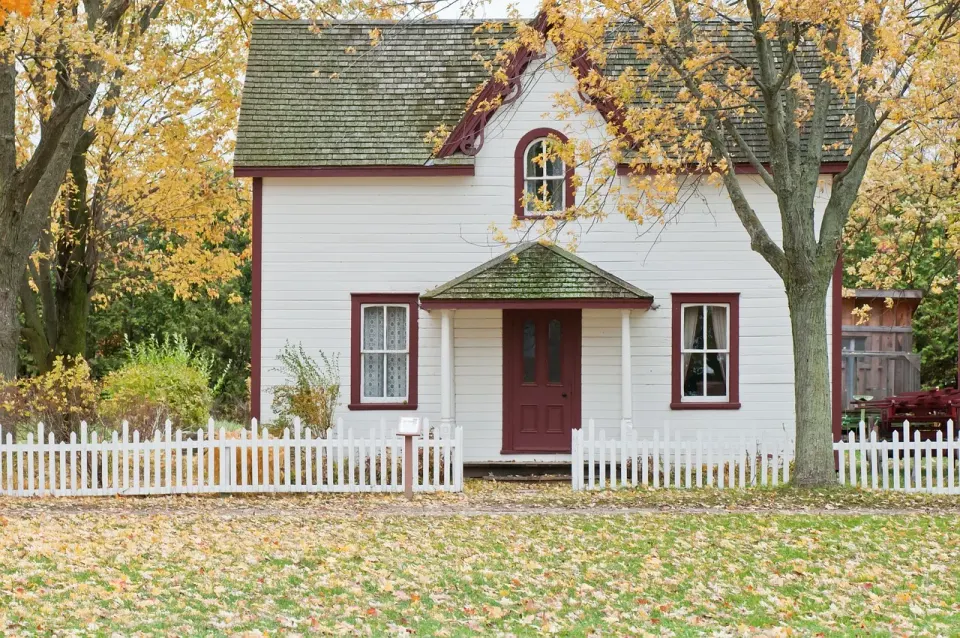
Use the season to your advantage. Rake the leaves, light the house well and photograph in the late morning. Buyers shopping in November tend to be serious. Many have a job move, a lease ending or a new grandchild to live near.
A fall sale also changes what comes after it. If you close in December, you may need somewhere to land before you buy again. Our comparison of 55-plus rentals and regular apartments lays out the bridge options for people who sell first and decide later.
Holding until spring is a fair choice, but it is not free. You carry another winter of taxes, insurance, heating and upkeep. Rates may also be higher or lower by then, and no one knows which. Compare the carrying cost with a modest price adjustment now.
Common Pricing Mistakes Long-Time Owners Make
Owners who have lived in a house for 20 or 30 years tend to make the same few errors. Each one is easy to avoid once you can name it. These are the four we see most often:
- Pricing to what a neighbor's home sold for in spring 2025, when rates were lower.
- Adding the cost of past renovations to the price, even when they are now dated.
- Picking the agent with the highest valuation instead of the best evidence.
- Refusing any credit on principle, then losing the buyer over a $4,000 repair.
The common thread is emotion standing in for evidence. A house that held a family for decades feels worth more than the comparable sales say. Buyers do not pay for that history. They pay for what the house offers them today, at today's rates.
One honest exception exists. If your home is genuinely rare in its area, such as a single-story house in a town full of split-levels, recent sales may understate its appeal to downsizers. Even then, test the higher price for two weeks, not two months.
Your Next Step for a Fall 2026 Sale
The practical answer is simple. Price to closed sales, sit just under a search threshold and plan your first adjustment before you list. With the 30-year rate at 7.40% and more homes on the market, buyers can afford to wait. A well-priced home gives them a reason not to.
Your next step is to request two comparative market analyses this week. While you wait, start the admin that every sale needs. Our change of address checklist lists who to tell once a closing date is set. Doing it early means one less job in the busy weeks before the move.
Should I lower my asking price if mortgage rates go up?
Is it better to sell my house in the fall or wait until spring?
How do I know if my agent's price is too high?
What is a seller credit when selling a house?
This guide is part of our Selling series. One small job a week arrives in Sunday Notes, with nothing to sell you.
In this article 8 sections


Sunday Notes
One email.
One small job
for the week.
Every Sunday: a single checklist, a single story, nothing to sell you. Unsubscribe in one click.